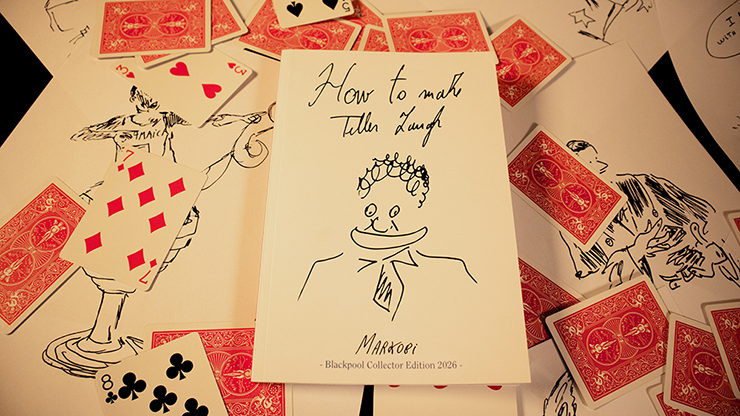
How to Make Teller Laugh by Markobi Book
Las Vegas. Penn and Teller: Fool Us. Markobi begins his act. A few seconds pass. And Teller bursts out laughing. Not a polite smile. Not a courtesy chuckle. A real, uncontrollable laugh from one of the most stone-faced presences in the history of magic. That moment raised a question that Markobi could not let go of: what truly makes magic work?
How to Make Teller Laugh is the answer, written by a FISM world champion of card magic who has spent years performing for some of the sharpest, most experienced eyes in the world. It is not a book about tricks. It is not a book about technique. It is a book about what lives underneath all of that: the atmosphere, the rhythm, the humour, and the fleeting moments where a spectator's analytical mind simply stops and lets go completely.
Markobi explores magic from an angle that most books ignore entirely: the audience's lived experience. The mechanics of a trick are the scaffolding. What the audience feels while watching is the building. This book is about the building.
That means freedom. It means taking risks on purpose, and sometimes by accident, and understanding why both matter. It means knowing the difference between performing magic and creating a genuine magical experience for the person standing in front of you. And it means understanding why, when the brain becomes so thoroughly overwhelmed by impossibility and surprise and laughter and wonder all at once, the only possible response left is exactly what Teller did that night in Las Vegas.
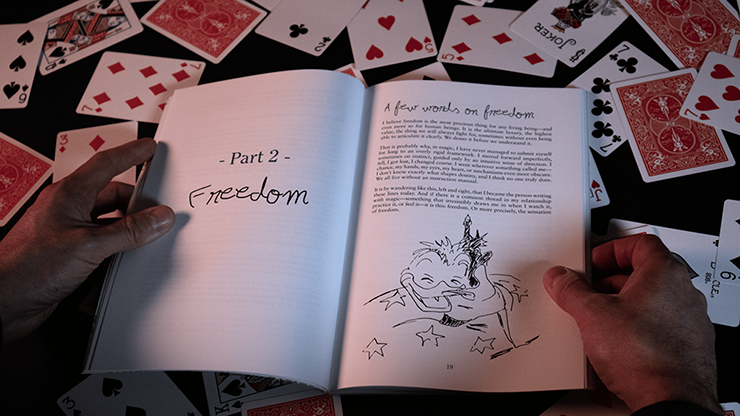
The book moves through a carefully considered structure. Part one establishes what magic actually is at its core: an emotion, not a demonstration. Part two explores the idea of creative freedom and dismantles the restrictive thinking that holds most performers back without them even realising it. Part three examines the art of achieving an effect without overtly doing the thing that produces it. Part four builds the complete model of magical atmosphere, from a triangle to a square, with real examples of both deliberate and involuntary risk that illuminate the theory in practical terms.
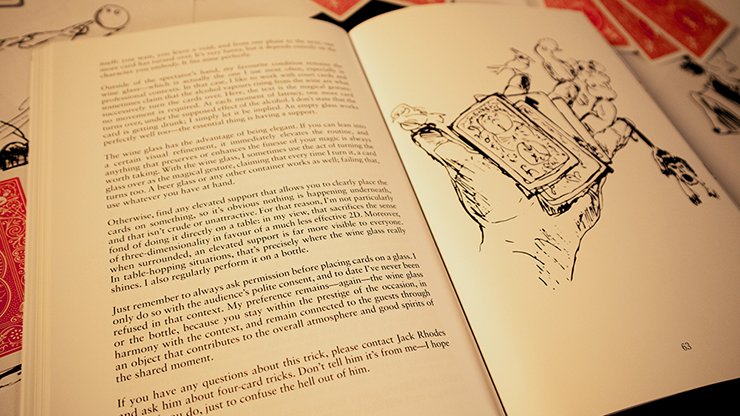
Then Markobi gets personal. He breaks down one of his own favourite card routines in full, not just the method, but the choices, the intentions, and the subtle decisions that make it play the way it does for real audiences in real rooms. And the book closes with Booster Packs: raw ideas, creative sparks, concepts, and lines that are designed not to be performed as-is but to fuel your own thinking and set your own creativity in motion.
This is not a book you read to learn something new to do. It is a book you read to rethink everything you already do. If you are looking for a new sleight, this is not your book. But if you want to understand what turns a demonstration into something that makes Teller laugh out loud, you are going to love every page of it.
Table of Contents:
Foreword and Introduction
Part 1: About Magic (Magic is an Emotion, Magic Beyond Discipline, Real Life and Magic)
Part 2: Freedom (A Few Words on Freedom, The Rule of "You Must...", Do You Need a Character?)
Part 3: Doing Without Doing (Doing X Without Doing X, Markers of a Universe, The Ultimate Secret to Stop Being Technical, The Cat and the Magician, The MMA Dynamic)
Part 4: Magical Atmosphere, From the Triangle to the Square (The Triangle of the Magical Atmosphere, The Square of the Magical Atmosphere, Examples of Voluntarily Taken Risks, Examples of Involuntary Risk)
Conclusion
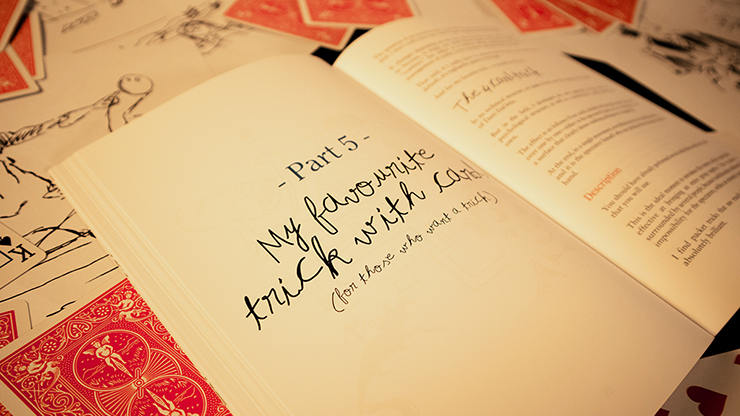
Part 5: My Favourite Trick With Cards
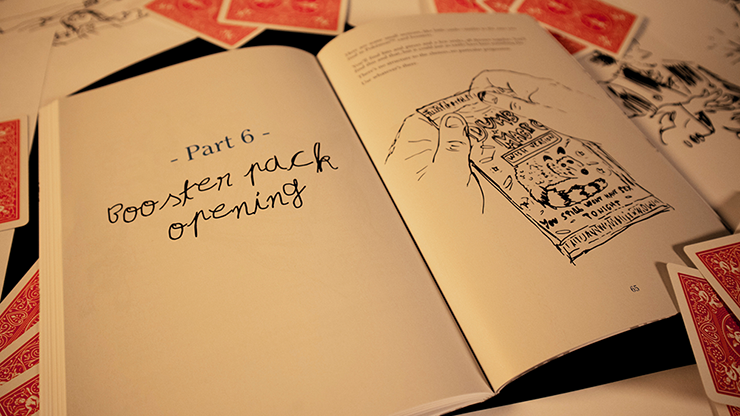
Part 6: Booster Pack Opening
Format: Softcover, 80 pages, 2026
Difficulty: Intermediate
Best for: Card workers, close-up performers, comedy magicians, and any performer who wants to understand what truly creates emotional impact in magic